
Explore The Science of Sleep: Why We Need It and What Happens in the Brain
Discover the fascinating science of sleep. Learn how your brain detoxes, repairs memory, and regulates emotions while you rest, and why skipping sleep is dangerous for your health.
We spend roughly one-third of our lives asleep. For a long time, scientists viewed sleep as a passive state—a time when the brain simply switched off to save energy. We now know that this couldn’t be further from the truth.
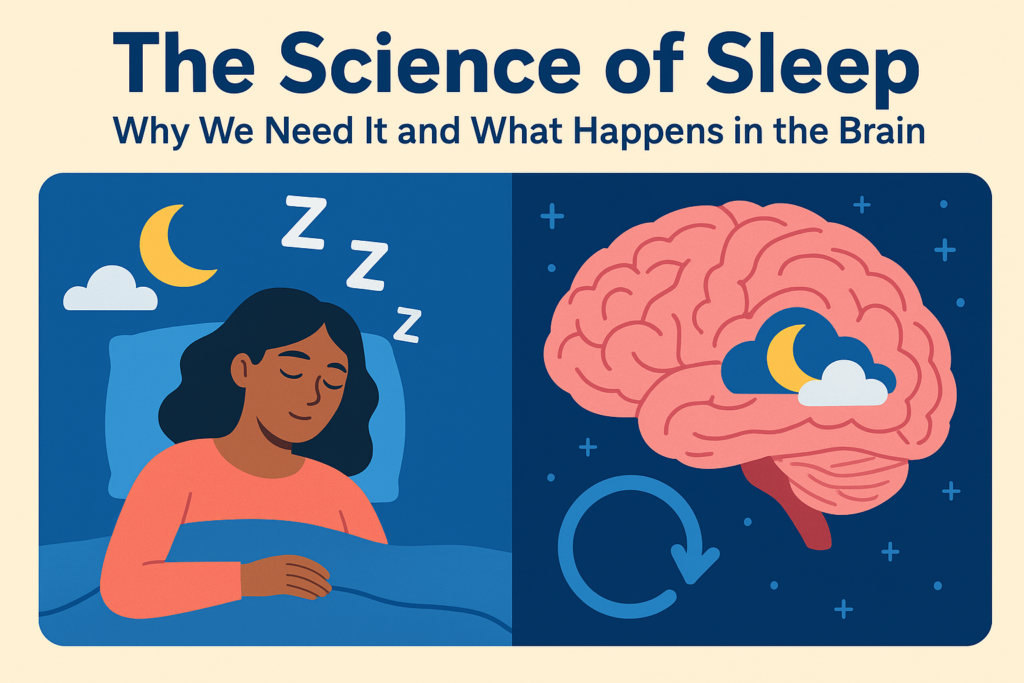
Sleep is a dynamic, highly active process. While your body rests, your brain is engaged in a complex symphony of biological maintenance, memory consolidation, and emotional regulation. It is the foundation upon which our physical and mental health is built.
This is a deep dive into the science of sleep, what happens inside your brain when you close your eyes, and why getting your eight hours is non-negotiable.
Why Do We Sleep? The Three Pillars
Evolutionarily speaking, sleep seems risky. It leaves us vulnerable to predators and stops us from eating or reproducing. However, because every species on Earth sleeps in some form, the benefits must outweigh the risks.
Scientists have identified three primary evolutionary reasons for sleep:
1. Restoration and Repair
During deep sleep, the body goes into repair mode. Muscle tissue regenerates, energy stores are replenished, and the immune system releases cytokines (proteins that fight infection). This is why you feel the urge to sleep when you are sick—your body is prioritizing physical defense.
2. The Brain’s Detox System
One of the most exciting discoveries in sleep science is the Glymphatic System. Think of this as the brain’s janitorial service. During the day, your brain cells build up metabolic waste products, including beta-amyloid (a protein associated with Alzheimer’s disease).
When you sleep, your brain cells actually shrink by about 60%, allowing the glymphatic system to flush cerebrospinal fluid through the brain tissue, washing away these toxins. This “nightly rinse” is crucial for long-term cognitive health.
3. Memory Consolidation
Have you ever struggled with a problem all day, slept on it, and woke up with the solution? That is your brain working offline. Sleep transforms fragile short-term memories into stable long-term memories. It moves information from the hippocampus (the brain’s temporary storage) to the cortex (the hard drive).
The Architecture of Sleep: How It Works
Two internal systems dictate when you sleep and when you wake up.
The Circadian Rhythm
This is your internal 24-hour body clock, controlled by a part of the brain called the Suprachiasmatic Nucleus (SCN). It responds to light and darkness. When the sun goes down, your brain signals the release of melatonin, the hormone that signals to your body that it is time to sleep.
The Sleep Drive (Adenosine)
From the moment you wake up, a chemical called adenosine builds up in your brain. It creates “sleep pressure.” The longer you are awake, the more adenosine accumulates, and the sleepier you feel.
Fun Fact: Caffeine works by blocking adenosine receptors. It doesn’t actually give you energy; it just temporarily masks the signal that tells you you’re tired.
The 4 Stages of Sleep
Sleep isn’t a uniform block of time. We cycle through four distinct stages roughly every 90 minutes.
Stage 1: NREM (Non-Rapid Eye Movement)
- The Transition: This is the lightest stage of sleep, lasting only a few minutes. Your heartbeat and breathing slow down. You might experience “hypnic jerks” (the sensation of falling).
Stage 2: Light Sleep
- The Disconnect: Body temperature drops, and muscles relax. Brain waves slow down, punctuated by bursts of electrical activity called “sleep spindles.” We spend about 50% of our sleep time here.
Stage 3: Deep Sleep (Slow Wave Sleep)
- The Restoration: This is crucial for physical recovery. Brain waves become very slow (delta waves). It is very hard to wake someone up from this stage. This is when the growth hormone is released and the “brain washing” detox occurs.
Stage 4: REM Sleep (Rapid Eye Movement)
- The Dream State: This stage is fascinating because your brain activity looks almost identical to when you are awake. Your eyes dart back and forth, and your breathing becomes irregular.
- Sleep Paralysis: To prevent you from acting out your vivid dreams, your brain temporarily paralyzes your voluntary muscles. REM is essential for emotional regulation and creativity.
What Happens When You Don’t Sleep?
Skipping sleep does more than just make you groggy. Chronic sleep deprivation disrupts the delicate chemical balance in the brain.
- Emotional Instability: Without REM sleep, the amygdala (the brain’s emotional center) becomes up to 60% more reactive to negative stimuli.
- Cognitive Decline: Lack of sleep impairs attention, alertness, concentration, reasoning, and problem-solving.
- Physical Health: Chronic lack of sleep is linked to heart disease, kidney disease, high blood pressure, diabetes, and stroke.
Importance of Sleep
Sleep is not a luxury; it is a biological necessity. It is the single most effective way to reset your brain and body health each day. By prioritizing sleep, you aren’t being lazy but you are engineering a smarter, happier, and healthier version of yourself.